 Activities
How Teachers Use YouTube for ESL Listening Activities
Last semester I played a two-minute YouTube clip about street food in Bangkok for my intermediate class in Seoul. Twenty students who'd been half-asleep suddenly had opinions. "Teacher, that's not how you eat pad thai!" One video. Two minutes. The entire energy of the room shifted.
YouTube is the largest free library of authentic English listening activities that exists. The problem isn't finding content -- it's turning a random video into something that actually teaches.
Why YouTube Works for ESL Listening Practice
Textbook audio recordings have a specific problem: they sound like textbook audio recordings. Nobody talks that way. YouTube gives you real people speaking at real speeds, with real accents, about things students actually care about. That authenticity is what makes the listening practice stick.
It's also free, works on every device, and your students are already watching it at home. You're not introducing a new platform -- you're redirecting a habit they already have.
The Best YouTube Channels for ESL Listening Activities
Easy English -- Street interviews with subtitles. People answer simple questions like "What makes you happy?" or "What's your morning routine?" The natural speech with subtitle support makes this perfect for A2-B1 learners.
TED-Ed -- Short animated explainers on science, history, and culture. The narration is clear and well-paced. Each video is 4-6 minutes, which is the sweet spot for a single listening task.
BBC Learning English -- Structured lessons with vocabulary focus, grammar explanations, and listening clips. More polished than casual YouTube content, which makes it good for homework assignments where you want consistent quality.
Rachel's English -- Pronunciation-focused content that works brilliantly as a micro-listening activity. Play a 30-second clip, students identify the reduced sounds or connected speech patterns. My advanced students in Tokyo loved these.
Vox -- Documentary-style explainers that are visually engaging and information-rich. Great for B2+ students who need exposure to academic-style English with complex sentence structures.
How to Turn Any YouTube Video into a Structured Lesson
Playing a video and asking "What did you understand?" isn't teaching. It's hoping. Here's the framework I use for every YouTube-based English ESL listening activity:
- Pre-listening (3 min): Teach 4-5 key vocabulary words from the clip. Show the video thumbnail and ask students to predict the topic.
- First listen (no subtitles): Students write down any words or phrases they catch. No pressure -- just noticing.
- Second listen (with subtitles): Students check their notes against the subtitles. What did they miss? Why?
- Comprehension task: True/false, gap-fill from the transcript, or sequencing events.
- Post-listening discussion: Connect the content to students' lives. "Do you agree with the speaker? Why?"
Tools That Speed Up YouTube Lesson Creation
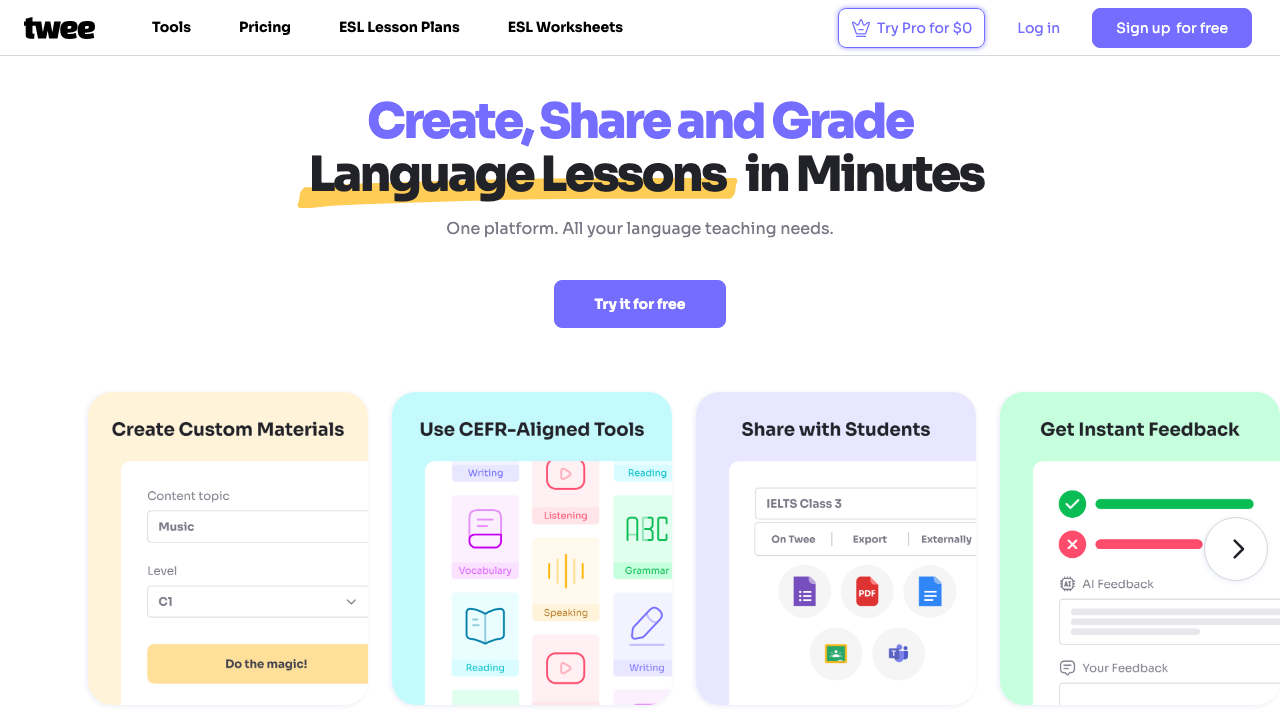
Twee is the fastest option I've found. Paste a YouTube URL and it generates vocabulary exercises, comprehension questions, and discussion prompts automatically. It's not perfect -- you'll want to edit the output -- but it cuts a 30-minute task down to five.
Edpuzzle lets you embed questions directly into the video timeline. Students can't skip ahead without answering. It's particularly effective because you see exactly where students pause, rewatch, or get stuck.
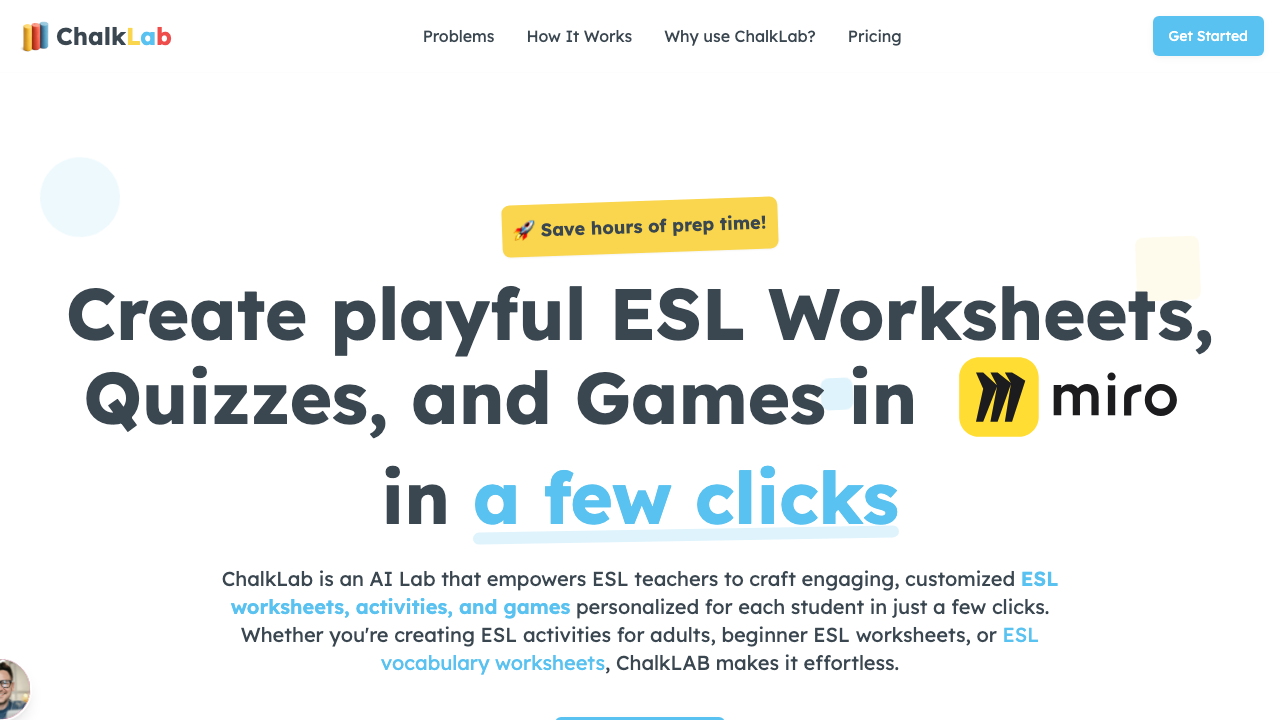
ChalkLab can generate a full listening lesson plan around any topic if you don't have a specific video in mind yet. Describe the topic and level, and it'll produce a structured plan you can pair with whatever video you find.
A five-minute video with a well-designed worksheet teaches more than a 45-minute video with no structure at all.
Common Mistakes to Avoid
Don't play videos longer than 5 minutes for levels below B2. Attention drops off hard after that. Don't rely on auto-generated YouTube subtitles for accuracy -- they're better than they used to be, but they still mangle proper nouns and fast speech. And don't skip the pre-listening stage. Without it, lower-level students will check out in the first 20 seconds.
For more ideas, check out our full roundup of ESL listening websites and tools for creating ESL activity sheets.